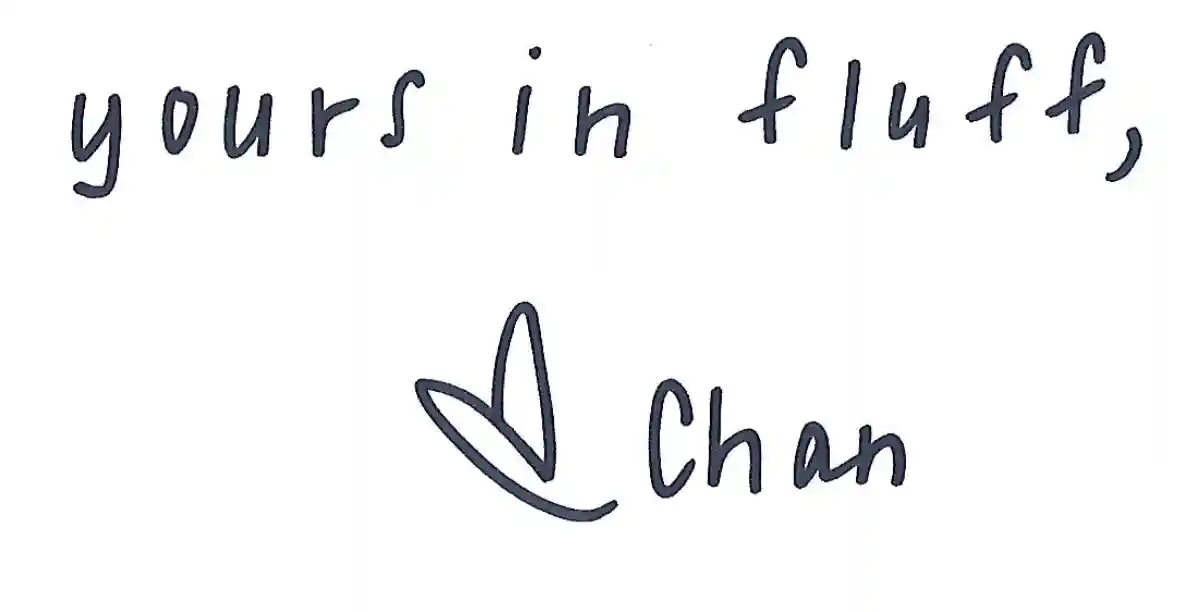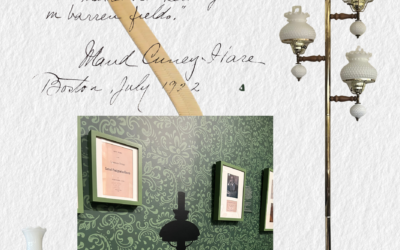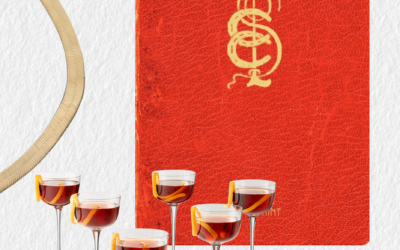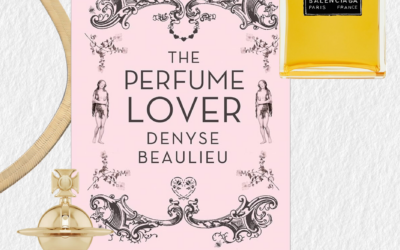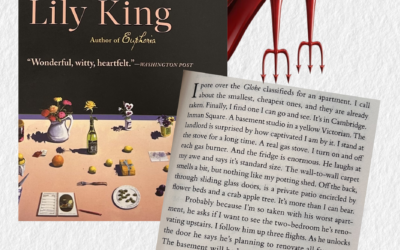
I went home for my mother’s birthday two weeks ago. (Y’ALL! VIRGO SEASON WORE ME OUT!) She likes to spend the day at the Spa at the Hotel Hershey and has for the last 15 years or so. In between services and sips of my Hershey’s Caramel Martini, I was caught up in a self-described champagne bubble of a girl.
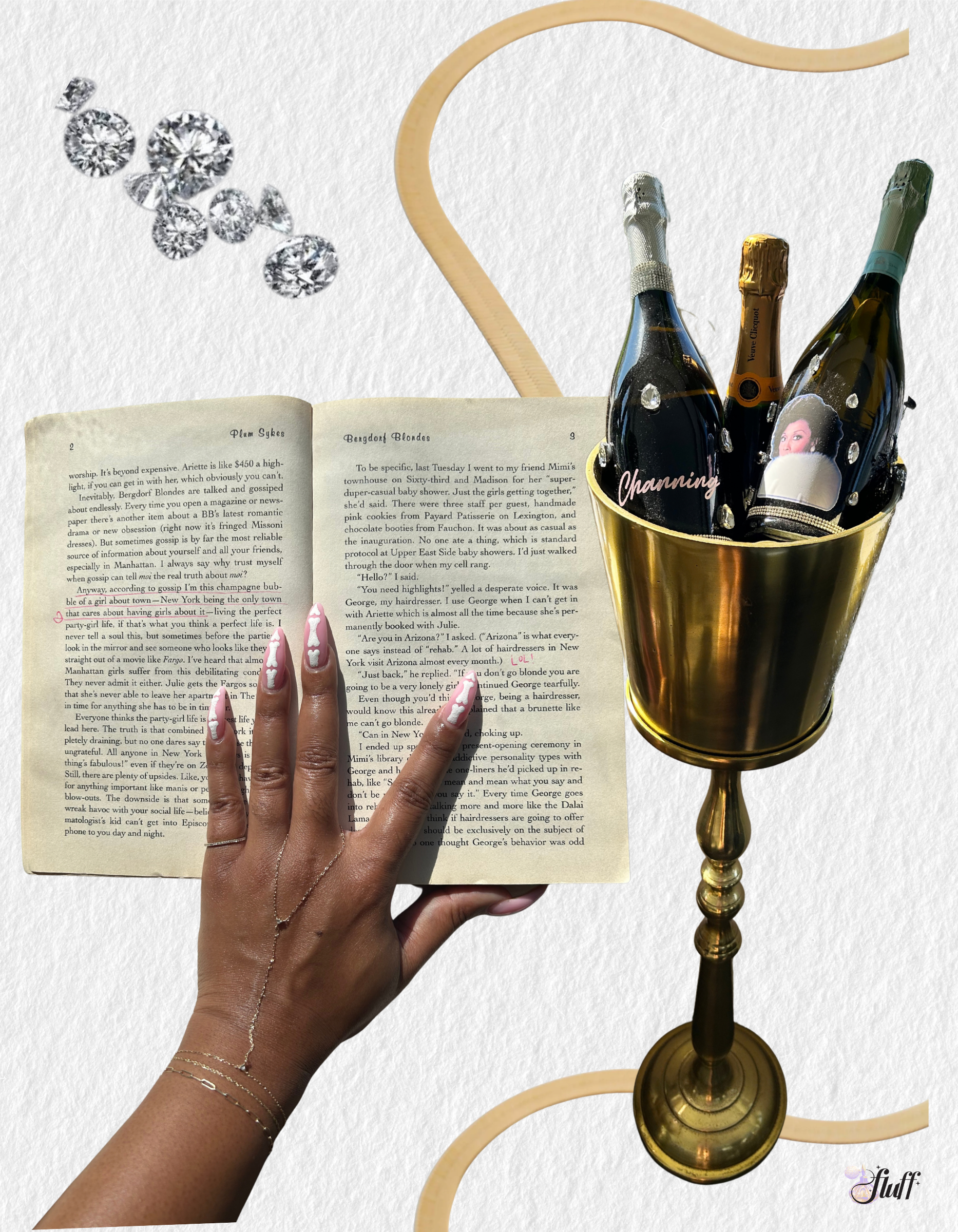
Introduced by Plum Sykes in her 2004 New York Times bestselling novel, Bergdorf Blondes, simply as “moi” (I’m serious, I don’t think I ever read her name in the whole 309-page book), she’s a New York-based fashion writer dashing off emails from “mo*@*oi.com.”
“Anyway, according to gossip, I’m this champagne bubble of a girl about town — New York being the only town that cares about girls having it — living the perfect party-girl life, if that’s what you think a perfect life is.”
I tore through it, ate it up even.
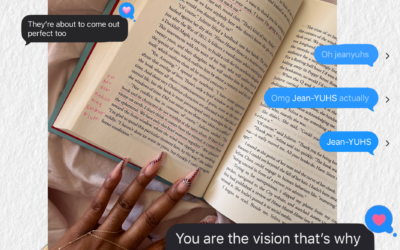
Bergdorf Blondes was written to be satire, but that doesn’t mean I took it any less seriously. In fact, as I noted in hot pink ink at the end of the chapter (because sometimes the margins aren’t big enough for all I have to say), this book is so silly and perfectly captures the frivolousness of New York in the early aughts, but at the same time, I can see the underlying commentary about women’s beauty as currency.
Between the now-dated beauty products and pop-culture references seamlessly woven together to tell a tale too delicious for me to resist, especially amid the famine of feminine frivolousness in the media I’m currently consuming, I realized this little champagne bubble is starving.
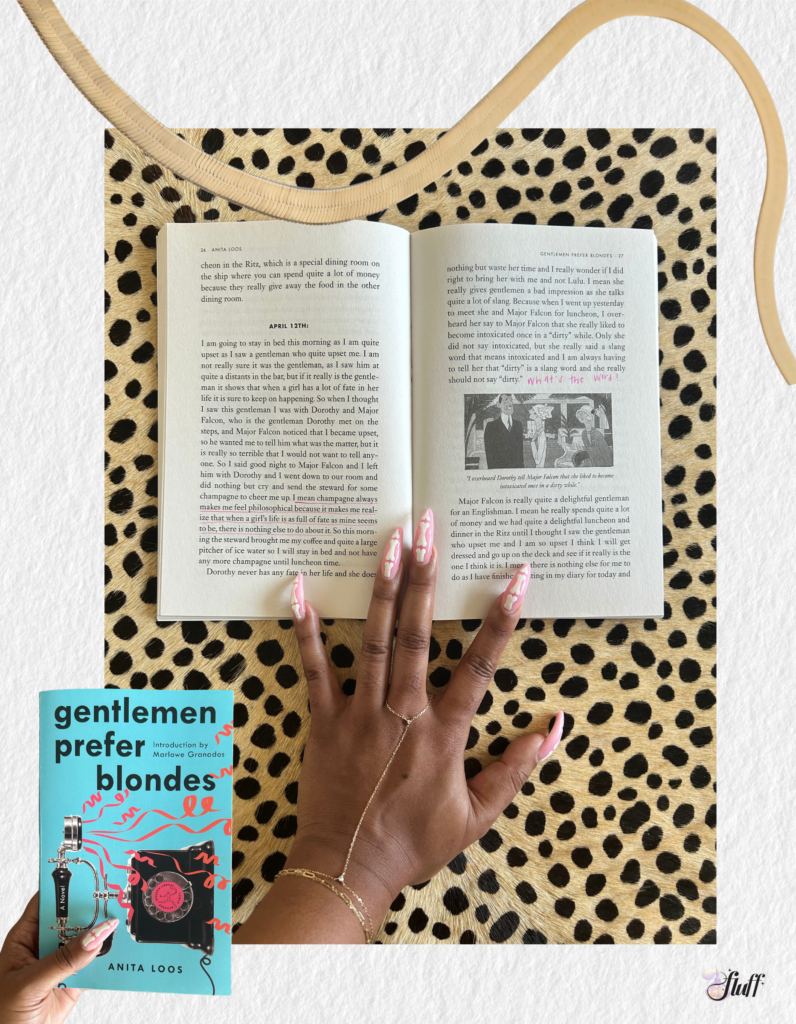
My hunger led me to Anita Loos’s Gentlemen Prefer Blondes, which I hadn’t read for obvious reasons (the main one being I’ll never be the sort of blonde referenced), but fresh off Bergdorf Blondes, I still wanted that same girly effervescence. And I found it in the Modern Library Torchbearers’ reissue of the 1925 novel. Loos was the first woman staff writer in Hollywood — if you’ve ever seen the 1939 movie The Women, she wrote the screenplay — and, like Sykes, she penned Gentlemen Prefer Blondes as a joke.
In the introduction, Happy Hour author Marlowe Granados writes, “There’s virtuosity in women who pursue their needs, wants, and diamonds in spite of it all.” And a little later, “[Loos’s] work bolstered my belief that fun and glamour could be a worthy intellectual pursuit.”
Is that what it means to be a champagne bubble? Loos unknowingly set into motion a white-woman archetype I’ve come to enjoy very much, if this letter to you is any indication.
Two years ago, I read Truman Capote’s Breakfast at Tiffany’s for the first time. I’ve seen the movie countless times, but to see Capote’s first swan, Holly Golightly, leap off the pages the way she did, saying things like, “I knew damn well I’d never be a movie star. It’s too hard; and if you’re intelligent, it’s too embarrassing. My complexes aren’t inferior enough: being a movie star and having a big fat ego are supposed to go hand-in-hand; actually, it’s essential not to have any ego at all,” was exactly what I mean by taking frivolousness seriously.
I asked Claude for examples of Black literary champagne bubbles, and he was like “‘Girl,’ you know that doesn’t exist yet.’”
No, he really said, “They exist, but mostly on screen rather than on the page, and that gap is telling. For much of the 20th century, Black women in fiction carried the weight of uplift and respectability. A frothy, amoral, self-invented girl who drifts through parties was a luxury the literature rarely allowed.”
And the thing is, I knew that. Not only do I know the perception of Black women and luxury, but I’ve watched it take shape working in New York media over the past decade. In that time, I saw the industry that once made room for nuanced, pleasure-centered Black cultural writing shrink dramatically.
There was a rush to course-correct in 2020, but that felt like and proved to be a grift. Wanting to see myself in a champagne bubble of a girl really cements what I want to do here. It’s time to get serious.
Oh, and for the record, Claude suggested Nella Larsen’s Passing, Dorothy West’s The Living Is Easy, Jessie Redmon Fauset’s Plum Bun, and Tia Williams’s A Perfect Find. I loved A Perfect Find (the book, not the Netflix movie) and it is one of my favorites. A couple months ago I read Victoria Christopher Murray’s Harlem Rhapsody, so I’m going to start with Plum Bun.
Have you ever heard that saying about men who loved their women to the point of invention, like the surgeon who invented rubber gloves to protect his wife’s hands or restaurateur Alfredo di Lelio who created Fettuccine Alfredo to coax his wife, who was weak after giving birth, to eat? There is also something to be said for the women who loved themselves to the point of reinvention.
I lost my way a little, but I’m back and more determined than ever to carve out this little space for myself. And for others who might also want to be a champagne bubble of a girl.
To us!