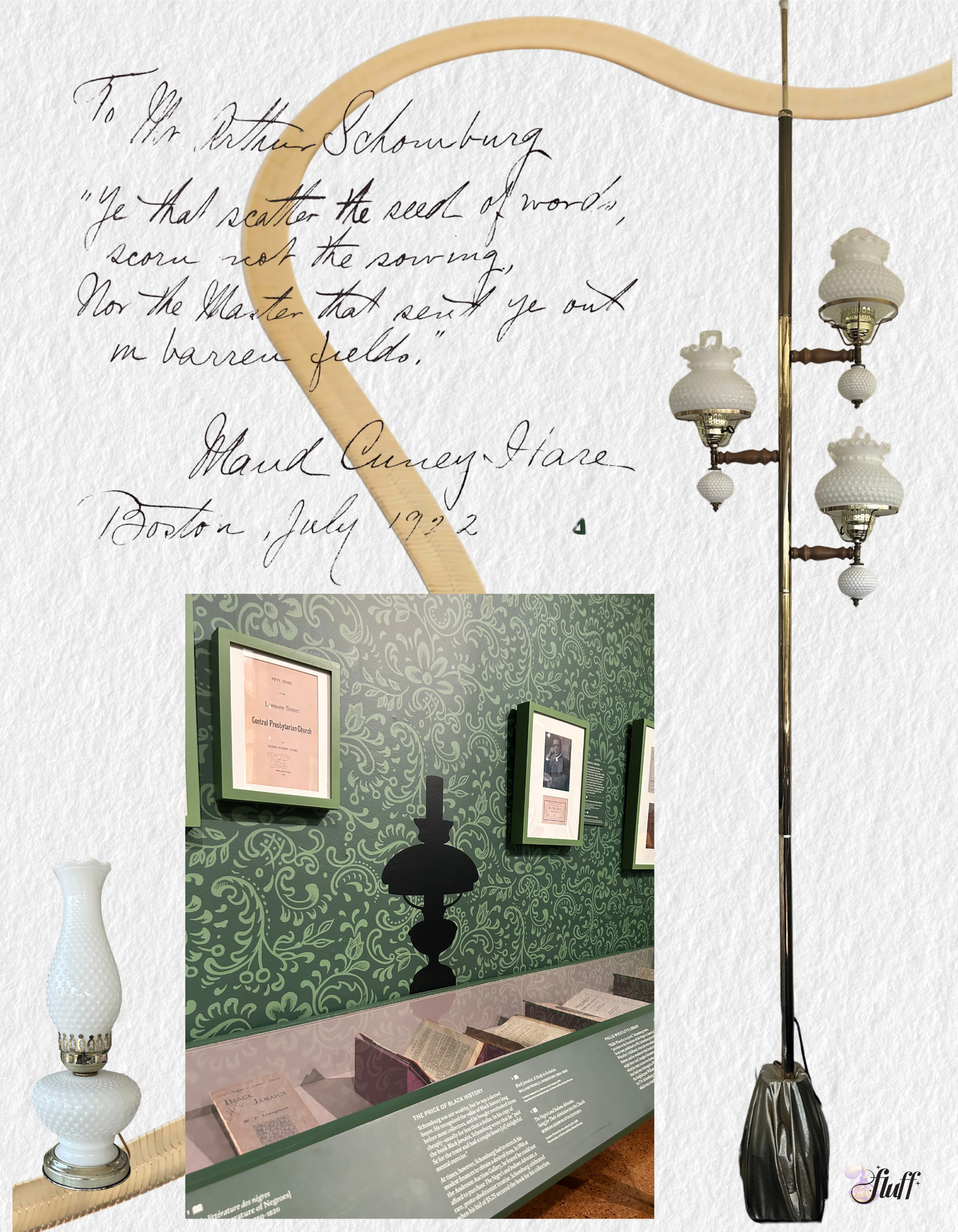
While walking through the To Uncover and Reveal to the World: Arturo Schomburg’s Library exhibit, a curator at the Schomburg Center for Research in Black Culture mentioned a phrase that really scratched an itch in my brain.
If last week’s letter to you felt like I was clearing my throat about this space and my goal here, this phrase gave me the words to fully articulate the thought.
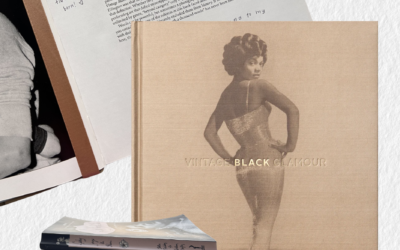
On Monday, I took the zine-making class led by Yusef Hassan of BlackMass Publications at the Schomburg. We began in the exhibit, guided by him and a curator. At the end of the tour, he explained how some of his most prized possessions in his personal archives are pieces of everyday Black life he’s collected from his travels. A collection of postcards, photographs of a Black woman in a fashion show, journals, Black ephemera.
It was quite fitting as we were standing in a selection of Schomburg’s personal archive, staged to look like the meeting room and library of the Negro Society for Historical Research circa 1912. To my eye, it looked like a parlor turned library.
I wanted to scream when I saw the silhouette of the oil hurricane lamp on the wall. The two lamps on my kitchen counter were among the first pieces I bought for my own parlor, and my collection has since grown to include 6 — well, 12, if you count each one of the two tension lamps, each housing three vertical lamps. I found them separately on eBay and Facebook Marketplace, mind you, and my mom picked them up for me.
“Something we live by here at the Schomburg, which was the basis of Arturo’s work and collecting, is that we are looking for vindicating evidence of Black achievement and Black life.”
Vindicating evidence. Wow.
Schomburg began collecting to prove the ingenuity of Black life, as evidenced in ordinary expressions, and at Lynnewood Hall, Gilded Age industrialist Peter A.B. Widener collected extravagantly to polish his image.
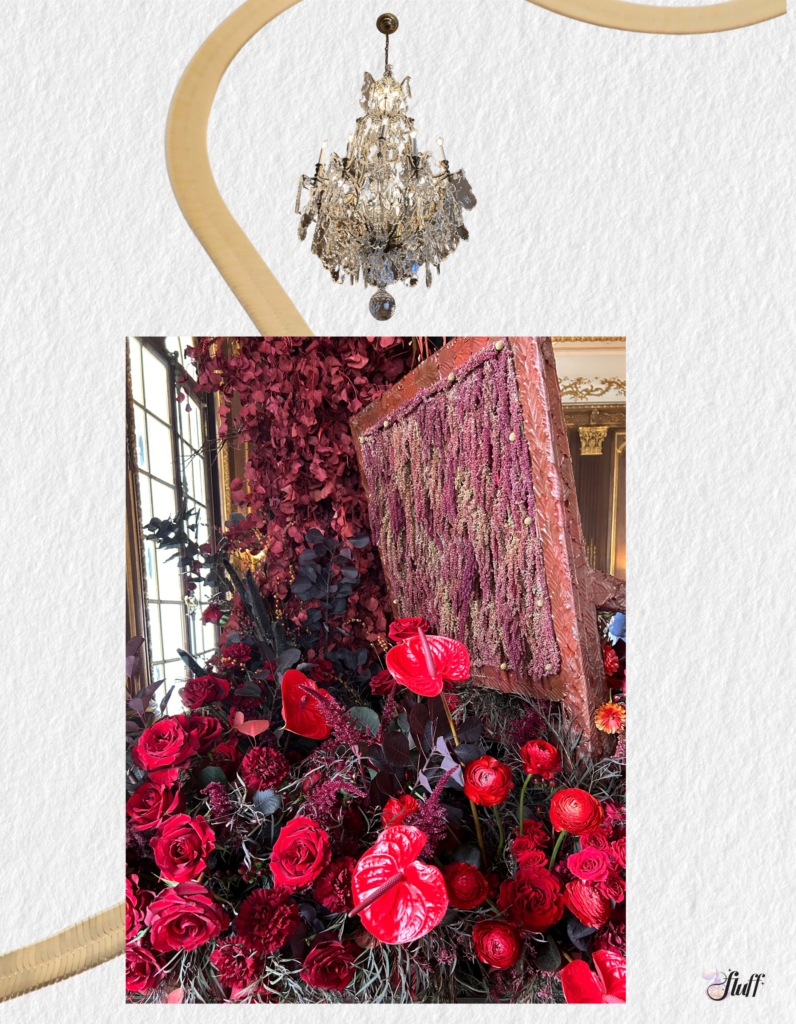
The Tuesday before I was at the Schomburg, I boarded Amtrak to Philadelphia to meet my mom to tour one of the last remaining mansions from the Gilded Age. Widener commissioned Lynnewood Hall in 1897. Two years later the sprawling 100,000-square-foot estate was completed in Elkins Park with 110 rooms and elaborate French gardens.
As soon as we got inside, staring up at the winding marble staircase in the foyer, my mom asked me if I could see myself living there. I said yes immediately. My imagination is way too active to say otherwise.
While Schomburg invited people into his parlor turned library to stir people up about the history hidden from them, Widener invited thousands into his ballroom to enjoy live music and to gaze at his art collection throughout his home. But to me, everything, even the chandeliers and the fireplaces, was art.
When Widener died in 1915 at 80, the New York Times reported he “left behind him probably the largest individual fortune in the city [of Philadelphia], an art collection containing many of the most valuable paintings in the world, and a score of costly monuments in various sections of the city, erected by him during his active days.”
Talk about vindicating evidence of a life well-lived. Not that I had any doubt a man who got his start as a butcher and climbed to become one of Philly’s most prominent businessmen would live like that, but even in the mansion’s dilapidated state, it wasn’t hard to imagine its grandiosity.
After Widener’s oldest son and grandson died on the Titanic in 1912 (the daughter-in-law and her lady’s maid survived), his son Joseph managed the home until his own death in 1943. Joseph had gifted the Widener art collection to the National Gallery of Art in Washington. Not long after he died, a portion of the grounds was sold and the remaining contents in the home were auctioned off.
Schomburg built his archive from scratch and fought for its preservation. The New York Public Library purchased it in 1926 with a $10,000 grant from the Carnegie Corporation, and in 1932, he became the curator of its Division of Negro Literature, History, and Prints. He held the position until he died in 1938.
According to the NYPL, visitors jokingly called him the “Sherlock Holmes of Negro History.”
Today, the Lynnewood Hall Preservation Society is working to restore the mansion’s shine, starting with a Fleurs de Villes partnership to bring HBO’s nighttime soap opera The Gilded Age to life through blooms.
For the first time in 80 years, the public was able to get a glimpse of the mansion, now alive with floral arrangements depicting the show’s characters. Widener, a robber baron, would have been most like the show’s own industrialist George Russell, whose depiction lorded over the ballroom, complete with a throne of waxy, bright red anthuriums.
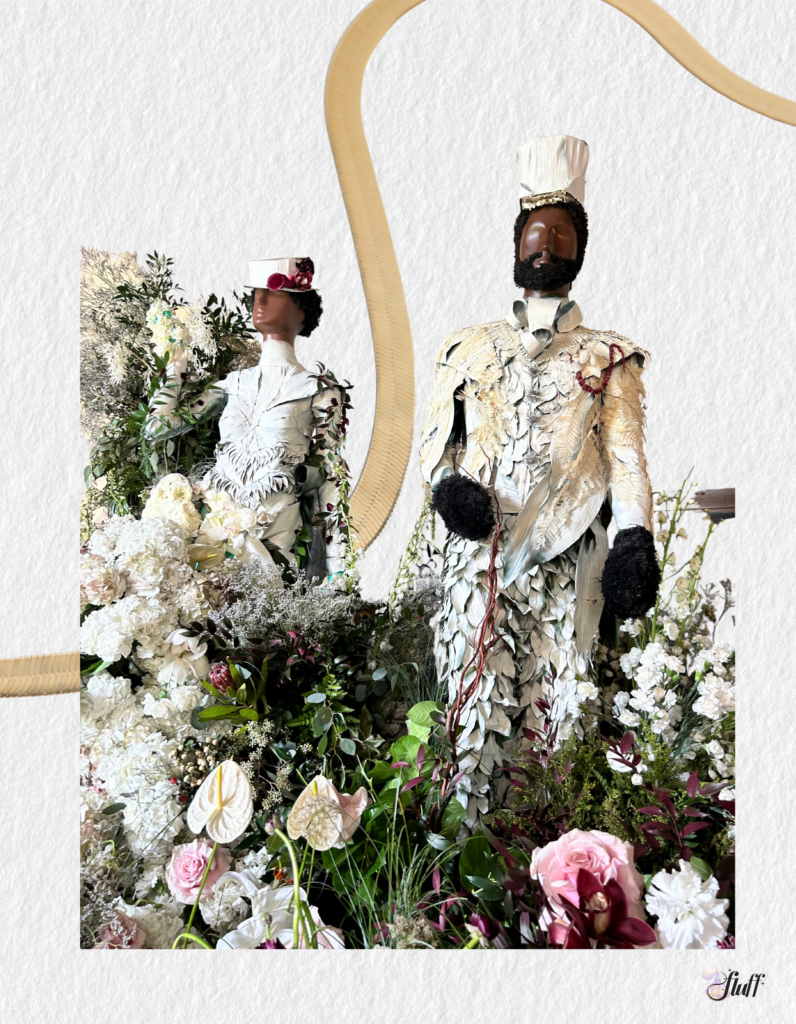
Peggy Scott, a Black journalist from Brooklyn, came to life in what one is to assume was a bright and airy classroom at one point. If you haven’t seen the show yet, I’m not revealing too much by saying a lot of the inspiration for Ms. Scott came from the work of Dr. Carla L. Peterson and her book, Black Gotham: A Family History of African Americans in the Nineteenth-Century New York City.
Now, obviously, true to the nature of the show and the natural order of New York City in the early 1880s, Ms. Scott was secluded from the rest of the cast, even in floral design. I actually loved that she exists in two worlds and navigates both beautifully, true to herself.
To quote the book jacket flap — I’m a mood reader and I haven’t finished this yet — “Black Gotham challenges many of the accepted ‘truths’ about African-American history, including the assumption that the phrase ‘nineteenth century Black Americans’ means enslaved people, that New York state before the Civil War refers to a place of freedom, and that a Black elite did not exist until the twentieth century.”
As Denée Benton, who plays Ms. Scott, summed it up perfectly for the Los Angeles Times, “You’re like, ‘Oh, we’ve always existed, but white supremacy really thrives on forgetfulness.’ There’s something insidiously powerful in continuing to disconnect us from those stories.”
Standing in Schomburg’s archive, fresh from the faded glamour of Lynnewood Hall, I had my proof: all dreams are worthy of restoration simply because they existed once, down to what one might deem frivolous. Fluff is the vindicating evidence.